

Scope
We map your vehicle models, charger models, sites and back-office platform, then agree on the pairs that actually need testing. Usually fewer than you expect.
An OS Technologies service
 Plug&Proveby OS Technologies Inc.
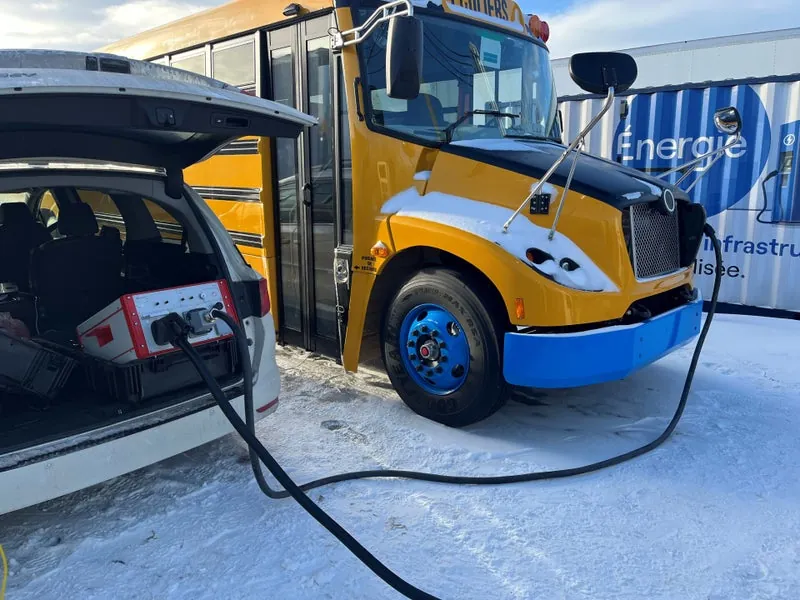
Plug&Prove is independent interoperability testing for EV charging. We put your actual vehicles and your actual chargers through a real session, capture what happens at protocol level, and hand you evidence — not opinions.
Why it matters
It is a schedule problem, a budget problem, and a contract problem. When a bus will not start a charging session on go-live morning, nobody in the room can say whose fault it is — and every day the fleet sits idle is a day you pay for twice. Plug&Prove moves that discovery to a moment when it is still cheap to fix.
What you get
Every vehicle model against every charger model you plan to deploy, with a pass, fail or conditional verdict for each pair.
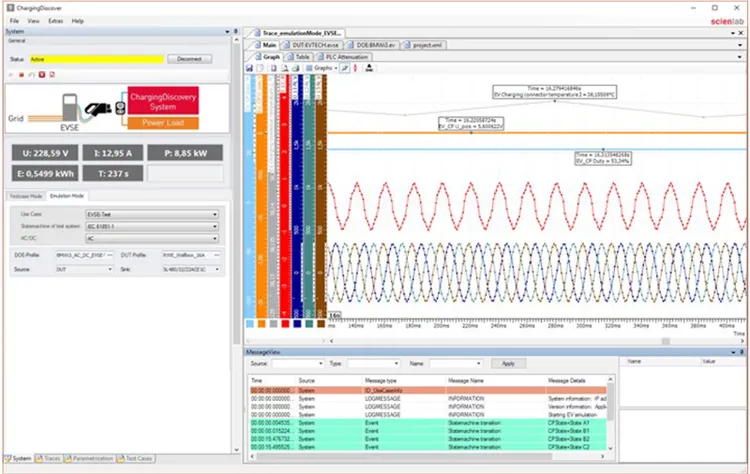
The raw protocol exchange for each test, timestamped and replayable — so a finding can be re-examined months later, by anyone.
For each failure: where in the session it broke, which side deviated from the standard, and what has to change.
What blocks go-live, what can wait, and what is cosmetic — so your team knows what to escalate to which supplier first.
How it runs
We map your vehicle models, charger models, sites and back-office platform, then agree on the pairs that actually need testing. Usually fewer than you expect.
Controlled testing with instrumented equipment, before anything reaches a site. Most incompatibilities surface here, where fixing them costs a phone call.
On-site validation with your real vehicles on your real infrastructure — because cable length, grounding and firmware versions all change the answer.
The matrix, the captures and the prioritised findings, walked through with your team and your suppliers.
The technical layer
A DC charging session is a long negotiation between two computers that have never met. Most field failures are not electrical — they happen in one of these steps, and without instrumentation there is nothing to see but a red light on a charger.
Powerline matching between vehicle and cable. Attenuation, retries, and the tricky case of a vehicle matching the charger in the next stall.
The vehicle finds the charging controller and opens a secure channel. Certificate chains and TLS versions are a frequent, and silent, failure point.
The two sides agree which protocol version they will speak. A mismatch here ends the session before any energy is discussed.
External identification, or a contract certificate presented by the vehicle. This is where most fleet deployments meet their first real wall.
The vehicle states what it wants, the station what it can give. Limits, schedules and the negotiated ramp all come from here.
Insulation verification and voltage matching before the contactors close. Timeouts in this phase are a classic source of intermittent failures.
The actual charge, with metering. We watch for derating, dropped setpoints and the difference between what was promised and what was delivered.
A clean stop, contactor welding detection and session close — the part everyone forgets to test until a charger locks a cable in place.
What the station reports to your platform: transaction records, meter values and status notifications. Billing disputes start here.
If a standard you depend on is not on this list, ask — coverage moves with the industry, and we would rather tell you plainly than stretch.
Who calls us
You have chosen vehicles and chargers but nothing has been installed. This is the cheapest possible moment to find out they disagree.
Equipment is on site, sessions fail intermittently, and each supplier says the problem is on the other side.
You need an assessment that neither the vehicle manufacturer nor the charger vendor wrote, to support a decision or a claim.
Plug&Proveby OS Technologies Inc.Vehicle models, charger models, sites, timeline. We will tell you which pairs are worth testing and what a campaign would involve.